Piscataway Locksmith Service Team
Local locksmith team
Mar 12, 2026 10 min read

If your front door has started fighting back — key jamming halfway in, handle wobbling like it's about to give up — your mortise lock may be sending you a clear message. Mortise locks are the heavy-duty, rectangular locking mechanisms built directly into the door edge, and they're common on older Piscataway homes, apartment buildings along Stelton Road, and commercial properties near Rutgers University. They're engineered to last, but no lock lasts forever without some attention.
This guide covers the five warning signs that your mortise lock is heading toward failure, what those signs usually mean mechanically, and when it makes sense to call a trained locksmith rather than push through with a can of WD-40 and good intentions. Catching problems early can be the difference between a quick repair and an emergency replacement — or worse, a lockout at midnight on a Tuesday.
## What Is a Mortise Lock — and Why Does It Fail Differently Than Other Locks?
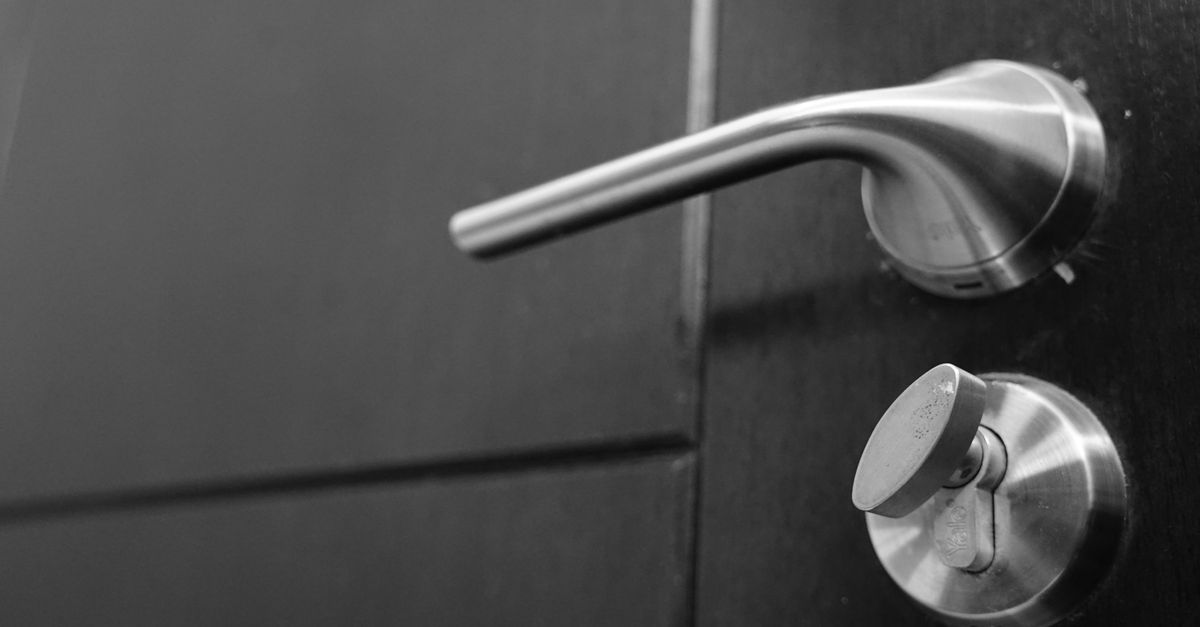
A mortise lock is a complete locking assembly — cylinder, latch bolt, deadbolt, and hardware — that sits inside a precisely cut pocket (the 'mortise') in the door body itself. Unlike a standard cylindrical door knob lock that screws onto the surface, a mortise lock set is integrated into the structure of the door. That design makes it stronger and more pick-resistant, but it also means that internal wear is hidden from view. You can't always see a problem developing; you can only feel it. Common on Baldwin mortise lock installations in upscale residential doors and on Corbin Russwin mortise lock hardware in institutional and commercial buildings, these systems have a lot of moving parts — springs, cams, levers, and a mortise lock cylinder — that can degrade independently of one another. When one component goes, the symptoms can look like a dozen different problems, which is why a professional diagnosis matters.
## Sign #1: Your Key Sticks, Binds, or Refuses to Turn Smoothly
This is the most common complaint our team hears, and it almost never fixes itself. A key that sticks inside the mortise lock cylinder usually points to one of three things: worn internal pins that no longer align properly with your key cuts, a cylinder that has shifted out of alignment inside the mortise pocket, or debris and dried lubricant that has hardened into a paste inside the keyway. In older Piscataway homes — especially the mid-century two-families in the Possumtown Road corridor — decades of humidity cycles cause door frames to swell and compress, which torques the mortise pocket and throws the cylinder out of true. Forcing a sticking key is almost never the answer. It accelerates wear on both the key and the cylinder, and it can snap a key inside the lock entirely. A skilled locksmith can disassemble the cylinder, inspect the pins and springs, clean or re-lubricate the mechanism correctly, and determine whether a cylinder replacement or a full mortise lock set replacement is the right call.
## Sign #2: The Handle or Thumb Turn Feels Loose or Spins Without Engaging
A mortise lock set operates through a spindle that connects the interior and exterior handles. When you feel slop in the handle — rotation that doesn't immediately move the latch — the spindle, the cam inside the lock body, or the spring tension on the latch bolt has worn down. On exterior door applications, a loose handle is more than an annoyance: it's a security vulnerability. A handle that spins freely means the latch mechanism can sometimes be manipulated without a key. If you're noticing this on a mortise lock set exterior door that faces the street or a shared hallway, treat it as urgent. Similarly, if the thumb turn on the interior deadbolt feels mushy or requires two full rotations to engage, the internal cam is likely worn and the deadbolt may not be seating fully in the strike plate — meaning the door isn't as locked as you think it is. Call (732) 518-3699 and one of our experienced locksmiths can assess the lock body the same day, including after hours.
## Sign #3: The Latch or Deadbolt Doesn't Retract or Extend Fully
Open the door and manually push the latch bolt — it should spring back immediately with firm resistance. If it drags, sticks partway, or barely moves, the internal spring has fatigued or broken. A deadbolt that doesn't extend fully into the strike plate is particularly dangerous, because the door can appear locked while offering almost no forced-entry resistance. This issue tends to accelerate in winter and late fall, when the wood in older Piscataway doors absorbs moisture and the mortise pocket tightens around the lock body. The latch scraping the edge of the strike plate on every open and close is a related symptom — it's not just annoying, it's grinding down both the latch face and the strike plate simultaneously. A qualified locksmith can remove the lock body, replace the spring cartridge if it's a modular design, realign the strike plate, and plane or adjust the door stop if door swelling is the root cause. Ignoring this one compounds the repair cost over time.
## Sign #4: Visible Rust, Corrosion, or Physical Damage to the Lock Body
Exterior mortise locks take a beating from New Jersey's humid summers and road-salt-heavy winters. Surface rust on the faceplate or escutcheon is cosmetic, but rust that has migrated inside the lock body — visible when you look at the mortise lock cylinder head or notice reddish residue around the keyway — means internal components are corroding. Corrosion causes springs to snap, pins to seize, and cams to bind. Physical damage from a prior break-in attempt, even a subtle dent or bent faceplate, can prevent the bolt from traveling its full throw. If you've moved into a Piscataway home recently and the existing lock shows any of these signs, don't assume it's functional just because it works today. Have an experienced locksmith inspect the full assembly. Upgrading to a quality replacement — including options like a smart mortise lock that integrates electronic access with a traditional mortise body — is worth considering if the existing hardware is badly degraded.
## Sign #5: You've Had a Recent Break-In Attempt, or the Lock Is Simply Very Old
A mortise lock that has been tampered with — jimmied, drilled, or struck — may function well enough to lock and unlock while carrying hidden internal damage. A bent cam, a cracked housing, or a partially sheered anti-pick pin can all survive a failed break-in and still operate day-to-day, right up until they don't. Age alone is also a legitimate reason to evaluate replacement: most quality mortise lock assemblies have a service life of 15–25 years under normal residential use, and many Piscataway properties have locks that predate that window by a decade or more. Our team provides 24/7 mobile locksmith service across Piscataway and the surrounding area — no shop visit required. We come to your door, inspect the existing hardware, explain clearly what we found, and confirm an exact price before any work begins. Factors that affect the final quote include the specific lock body model, the parts required, the time of the service call, and travel distance. Call (732) 518-3699 any time — we answer around the clock.
## Our Locksmith Services: What Piscataway Locksmith Covers
Whether you need a single cylinder re-keyed or a full commercial door overhaul, our trained team handles it all across the Piscataway area. Here's a specific look at what we offer: residential mortise lock repair and replacement; mortise lock cylinder extraction and re-keying; door knob lock installation and repair; deadbolt installation (single and double cylinder); smart lock installation and troubleshooting; key duplication and key cutting; lock-out service for homes and apartments; car lockout service; broken key extraction from lock cylinders and ignitions; ignition repair and replacement; transponder key programming; car key replacement (including fob-integrated keys); high-security lock upgrades; strike plate repair and reinforcement; door frame repair after forced entry; master key system design and installation; access control installation for commercial properties; commercial locksmith services for offices, warehouses, and retail; panic bar and exit device installation; padlock removal and replacement; cabinet and mailbox lock service; safe opening and combination reset; window lock installation; door closer adjustment and replacement; lock rekeying after tenant turnover; and emergency locksmith response 24 hours a day, 7 days a week throughout Piscataway NJ and nearby communities.
When you call with a lock emergency — whether it's a stripped mortise lock set exterior door, a car lockout on Route 1, or a commercial property with a compromised entry — we dispatch a skilled technician directly to your location. No hold music, no next-day scheduling for urgent calls. Our team is mobile, insured, and equipped to handle most jobs on the first visit.
Frequently asked questions
How much does a locksmith cost in NJ, and what affects the price for mortise lock work?+
There's no single flat rate because several variables shape the final quote: the specific lock model and brand (a Baldwin mortise lock or a Corbin Russwin mortise lock typically requires different parts than a standard residential unit), whether the job is a repair or a full replacement, the time of day (after-hours and weekend calls involve different logistics), and travel distance to your location. At Piscataway Locksmith, we always confirm an exact up-front price before any work begins — no surprise charges after the job is done.
How much should an emergency locksmith cost, and is there a call-out fee?+
Emergency locksmith pricing in NJ varies by provider, time of call, and scope of work. Some services charge a dispatch or call-out fee that is separate from the labor and parts cost, while others bundle it into the total. What matters most is transparency: you should always know the full price before a technician touches your lock. We provide a confirmed quote on arrival — factoring in the time of the call, travel, and the specific work required — so there are no guessing games about what you'll owe.
Can a sticking mortise lock cylinder be repaired, or does the whole lock set need to be replaced?+
Often, a sticking cylinder can be resolved through professional disassembly, cleaning, proper lubrication, and pin inspection — especially if the problem is debris buildup or minor wear. However, if the cylinder housing is cracked, the pins are severely worn, or the lock body itself has corrosion or physical damage, replacement of the cylinder or the entire mortise lock set is the more reliable and cost-effective long-term solution. A trained locksmith can tell you which applies after a hands-on assessment.
What is the difference between repairing a mortise lock versus replacing it with a smart mortise lock?+
A traditional repair restores the existing mechanical assembly to working condition — ideal when the lock body is structurally sound and the issue is limited to worn springs, a fatigued cylinder, or alignment problems. Upgrading to a smart mortise lock makes sense when the existing hardware is at end-of-life, you want keyless or remote-access capabilities, or you're improving security on an exterior door that sees heavy use. Smart mortise options integrate electronic credentials with the same robust mortise body design, so you don't sacrifice the structural advantages. Our team can walk you through both paths and recommend what fits your door, your security needs, and your budget.